Showing posts with label interview. Show all posts

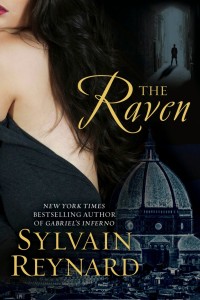
An Interview with Sylvain Reynard

I'm ending 2017 on a high point. I finally summoned the courage and asked Sylvain Reynard if he would consent to an interview, and to my delight, he did!


(¯`•ღ•´¯)


For those who don’t know, my introduction to the world of Twilight fanfiction came from Sylvain Reynard. I picked up Gabriel’s Inferno in a bookstore, intrigued by the Dante aspects of the story. After I read it, I went to Amazon to leave a review, and saw that someone else wrote that it was Twilight fanfiction at one time. I was vaguely aware of fanfiction as a concept, but I had no idea that it could be smart and cultured, building something entirely new from the source material.

I started poking around in the Twi fic world, and eventually decided to give it a try myself, figuring I could quickly delete everything and disappear into the ether if people were cruel. (This is the internet, after all!) I was kind of stunned and overwhelmed by the response I got.

After I published my first novel, I wrote a little note of thanks to Sylvain and was touched that he was kind enough to respond.

(¯`•ღ•´¯)

Lissa: What were your expectations, if any, when you started writing, and how did you think readers would respond to a story Edward as a Dante expert?

S.R.: Hello Lissa. Thank you for inviting me to join you and your readers. When I started writing, I had the idea of introducing the story of Dante and Beatrice to a wider audience. The story isn’t widely known anymore outside of Italy. But to tell the story to a contemporary audience presented a challenge. So I reimagined Dante as a professor of Italian Studies who specialized in Dante. And I was surprised but very pleased when readers embraced him.

Lissa: I’ve always said the fic world one of the best environments for a “baby writer” because of the warm, supportive, and encouraging environment my readers gave me. Was it the same way for you?

S.R.:It helped me overcome my shyness. I’m sure readers who’ve interacted with me over the years will likely laugh at this remark because they know that I am still shy. But without the blanket of anonymity, I wouldn’t have put my fiction writing out in front of the public.

Lissa: Fanfiction still struggles to be recognized as a transformative, transgressive medium. It’s accused – mostly by those who’ve never plumbed its depths – of lacking creativity or lazily building off others’ work. Do you feel that perception is changing given the number of authors who’ve been “discovered” in the fic world? Will we eventually come to a point where fandom is an accepted aspect of the writing community?

S.R.:Like any human community or institution, there is factional conflict, political intrigues, etc. in communities of fans and it has always been like that. The purpose of fan groups is to show support and enthusiasm for something – a comic book, a story, a film, etc. Truthfully, I think both readers and editors were looking for something new and fresh to read and so they began looking at the fandoms. It was a smart move on their part – because they found creativity that hadn’t been pre-packaged and moulded.

Lissa: Since I was a child, I’ve “written” stories in my head, including re-writing books and movies I liked to have better endings or send the characters on new adventures. I’ve often said it’s like the people come to me, full-fleshed, and say, “Hello, my name is So-and-So, and this is my story.” In a way, it’s like I’m watching it play out in my head, and sometimes I feel like I have little input into how things play out. How does your writing process work? Do you create the characters or the storyline first? Do you actually plot it out (some strange creatures are said to use outlines!), or do write it as it comes to you?

S.R.:For me, the characters and the story line come together. I have thoughts such as this: A modern day Dante fights to win his Beatrice, who happens to be one of his graduate students at the University of Toronto. (Gabriel’s Inferno) So the characters and the narrative come together. Then I plot it out in my mind first, from beginning to end, before outlining it on paper. However, my characters have a tendency to surprise me …

Lissa: I read another of your interviews where described how you use language to try to paint a scene, like an artist painting a canvas – almost a visual experience. Is that an accurate summation? For me it’s about sound. I point to Emily Bronte as my greatest writing influence. She was a poet before she was a novelist, and she understood the power of the sound of words when constructing a scene. (As an example, in Wuthering Heights, she used harsh-sounding names for her wild characters: “Catherine” and “Heathcliff,” and soft, lilting names for her gentle characters, like Isabella and Linton.) That’s one of the things I try to keep in mind as I’m writing fiction: the flow and rhythm of words and how it helps weave the scene. Is there a writer in particular who had an influence on your writing style?

S.R.: I write by sound too. I can’t listen to music or have too much background noise when I write because it interferes with my ability to hear the words. But it is like an oil painting, too, because I write a scene and then go back and add to it over time, in layers. I admire 19th century European writers but I don’t really write like them.

Lissa: The last five years have been incredible in the writing world. Small publishers and self-publishing changed the landscape, and it was in no small part due to Fifty Shades of Grey. Fifty’s original publisher was the one which picked me up. Now, it seems we’re going through another shift, with the closure of quite a few of those small publishers, including mine. Where do you think the industry is going? If you had to give advice to a new author today, what would you tell them to do?

S.R.: I think the industry will continue to expand and contract and editors and readers will continue to look for new and fresh voices. But the medium of publishing is changing. Writers can self-publish easily or they can publish on a website such as Wattpad. It’s probably easily to put one’s work out for viewing now than ever before, but it’s also more difficult to garner an audience because there are so many authors vying for readers.

For new authors, I suggest writing every day. And I also suggest finding someone you trust who will give you constructive criticism. Everyone needs an editor.


Lissa: Lastly, what question have you always wanted to be asked in an interview, but no one ever has? I’ve always wanted to be asked my favorite dinosaur, but for some reason, no one ever does. It’s a pterosaur, by the way.

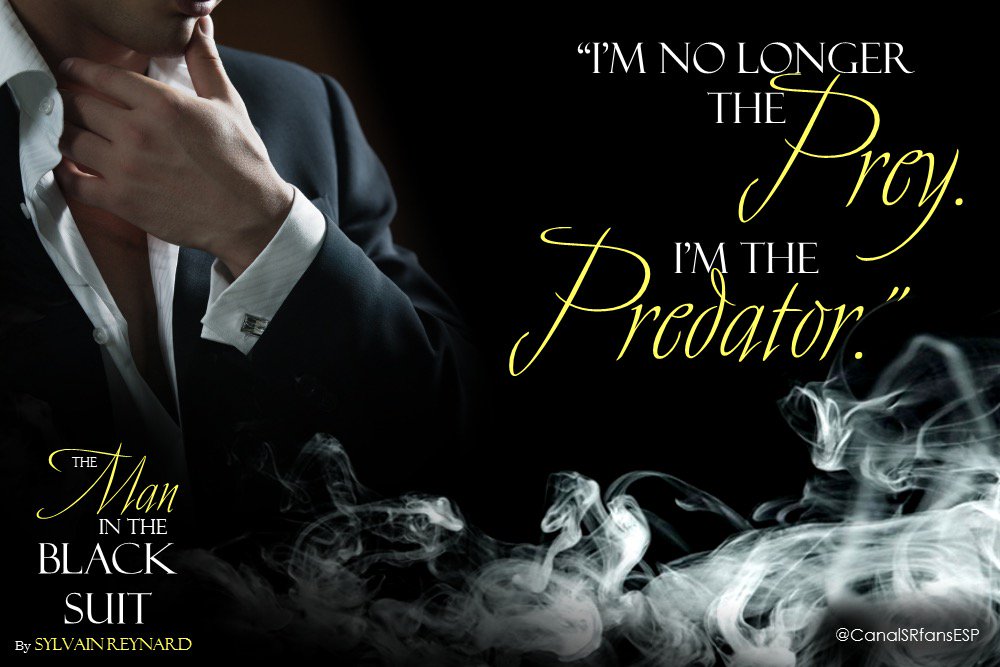
S.R.: My favourite dinosaur is the T-rex. No one has ever asked me what my favourite Greek island is – It’s Santorini. I’m fortunate to be able to take readers to Santorini, Paris, and beyond in my new book The Man in the Black Suit, which just released December 19th. Here are the links, in case readers wish to read more about it:


Paperback
Ebook
.¸¸•.¸¸.•´¯`• (¯`•ღ•´¯)•´¯`•.¸¸.•.¸¸.

I'm so grateful to Sylvain for granting me this interview, and for being an inspiration.

You can find his website here. And check out his Amazon page for all of his books.

A Chat with New Author Jess Molly Brown

We had a previous chat with Jess Molly back when she was a fanfiction writer and aspiring author.  Now, she’s taken the plunge and published her first book, Moms on Missions.  Everybody, welcome Jess back to the blog!

Jess: Hi guys! *waves*

Lissa: Well, Jess, here you are on the Dark Side, and as you’ve discovered, we don’t have cookies. The cookies were a lie.

Jess: You’re so mean to me. *sobs* I was looking for the raspberry chocolate Mallomars.  I’m starving here. I’m an author living in a cellar without cookies. How could you?

Lissa: You’re an author. You’re supposed to starve. And pose broodily in front of windows in an unheated garret in Paris. And write long, eloquent letters on a typewriter about how this torture fuels your writing. Didn’t you get the memo? It should have been in your welcome packet.

Jess: *grumbles* I thought it was just a directive on self-promotion.

Lissa: But I’m sure you’ve discovered some aspects of publishing that you’ve enjoyed. What’s been your favorite part so far?

Jess: It’s quite fun telling people I’m a published author. If I had a dollar for every time someone’s jaw drops I might be able to move out of the cellar.

Okay. I really enjoyed seeing my manuscript take on its professional form in Kindle format. There were so many things I wanted to add to my ebook and I got to try out most of them. For instance, Vince’s website, Mommageddon, links to a page on my website. If a reader touches the hyperlink, they travel to my site. Making that was fun.

Lissa: I’ve heard of the hyperlinks-in-books thing. It’s supposed to make the reading experience more fun and interactive.  The younglings like it, or so I’ve heard.  Look at you, all trendy and stuff!

Jess: Who woulda thunk, eh? But anyone who meets me will discover what a nerd I am.

Lissa: What’s been your least favorite part? For me, it’s a lack of time to write.

Jess: There’s never enough time in the day. I have to be hyper-organized and I always feel I’m not. I actually enjoy the marketing aspects of being an Indie, but they’re time consuming.

Lissa: I amend my previous answer: The marketing is the part I like the least. It’s so hard for me to approach people about my books.

Jess: I’ve actually rehearsed saying, “I’m a published author.” Now I’m over that hurdle, but I plan out my support requests to bloggers to a ridiculous degree. I’m hoping it becomes a habit and I can stop overthinking what I’m going to say. On the upside, everyone’s been lovely.

Lissa: Honest to God, I really thought when I first published that all I had to do was write the thing and the publisher would take care of all the rest. As I learned—much to my dismay— that isn’t really a thing these days, even with the big publishing houses.

Jess: Yes, everyone I know says that. They don’t do it anymore. The author must promote herself. It’s one of the reasons I decided to go Indie.

Lissa: Your success is directly tied to how much you work for it. Unless, of course, you’re one of those authors who gets hit by the mysterious and seemingly arbitrary lightning bolt of fame.

Jess: Wouldn’t you love to know the key to that? It must be possible, although I’d be happy right now just to earn enough to pay some bills. I was shocked to discover my book sitting at #155 in Comedy Romance on Amazon (which lasted about five minutes) because I only sold seven books that day. That means that out of 60, 000+ Comedy Romances, only 154 books sold more than seven copies. That was a real eye-opener and redefined the definition of success for me. Am I giving away author secrets by revealing that?

 Finding time to write is quite difficult. I didn’t understand that before I had a book of my own.

Lissa: I imagine it’s even worse for you, because I didn’t have to worry about the myriad little aspects of formatting and coordinating pre-readers and such.

Jess: The formatting was easy because I hired out.  Even though I have a substantial number of followers, getting people to read and review ARCs was unexpectedly difficult. I haven’t learned the trick yet for picking a good Release Day. I was basing it on my own calendar rather on what will get attention, and several of the people to whom I sent ARCs were just too swamped to review immediately. I think that’s probably par for the course, but just in case, I should learn to consult the web. The internet has answers for everything, thank God.

Lissa: What made you finally decide to take the plunge and self-publish? There had to be a single moment where you said, “This is it. I’m doing it.”

Jess: Yeah, a lot of considerations factored in. It took me a while to take the plunge because I didn’t think I knew enough about it to do a good job. Maybe it comes down to, “Why not?” Of course, I’ve picked up a lot of knowhow since I started writing MOMs in 2012. I had some interaction with publishing houses and I was planning to go that route. However, there’s a ton of waiting involved. If one’s book does get accepted by a house, it’s still going to take about two years to get the book on shelves. Plus, there were three major things that drew me to traditional publishing. The first is the amount of exposure a house can provide. One can’t really argue with that. The second was my belief that the house would take care of many factors for me—like covers, editing and marketing. But those things haven’t proven as difficult to do as I imagined. The third attraction was my erstwhile belief that a house would protect me and my work from plagiarists and take care of other legal issues. Unfortunately, I’ve heard from many friends that their houses haven’t succeeded in preventing theft. That was a huge determining factor in my decision.

Regardless, after major revisions to the story, I was going to resubmit to the house I favored. And then a friend who’s a popular author sat me down in 2015 and told me I should self-pub. I thanked her and said I didn’t think it was for me and then another six months went by with no progress. It got to the point where I thought the story was good enough to sell itself and I’d built a solid social media base. So, I finally listened to my friend and I’m glad I did.

The thing that appealed to me the most about self-pub was the total control I’d have over my work. I got to literally shape the book, choose my publishing date and market it. It hardly takes any time at all to self-pub. Once I applied for copyright, I had the book up in five weeks and it could have gone up sooner but I wanted more advance marketing. The two longest parts of the process for me were getting the professional edit done, and waiting for my cover artist (my daughter) to complete the painting used on the cover.

Lissa: You and I are so different in this respect. I was hoping I wouldn’t have to make all of those decisions about my book. And then here comes my publisher asking me to pick the cover art. With every book, that’s been an intensely frustrating process for me. The last time, I picked some images and my cover artist very gently suggested, “Um, why don’t we go with something entirely different?” and came up with this really awesome design on her own. Such a relief!

Jess: I love it when that happens. I actually have a short story prepared to publish but I decided it will wait until I’ve written the first book of the trilogy that follows it. One of my friends made three potential covers for me after she read it and I’d never have imagined anything so lovely.

Lissa: Did you go into MOMs with an idea of what you wanted for the cover image, or did your daughter come up with the design all on her own?

Jess: What a wonderful question. You know, I studied art in high school and loved it, but I have the worst time coming up with visual concepts. Some authors are so incredibly talented at making their own covers. T.M. Franklin is one. Vera Nazarian is another. I admire their talent immensely and I totally lack that kind of vision.

I had four years to play around with the idea of covers for the Mommageddon Series. I sucked at it. I naturally wanted something that would visually integrate the books in the series and could only come up with two ideas. One was moms knitting baby booties and young couples objecting. The other was the couple’s hands. I considered using Vince’s hand wielding a paintbrush and Dani’s wielding a drumstick as though they were having a swordfight. The thing I disliked about that was that I wanted to keep Vince’s love interest a secret. That’s a major spoiler for the book. I’ve come to realize that I can’t keep Dani’s name out of reviews. Reviewers love her and they use her name all the time. Hopefully, the misunderstanding at the beginning of the story still reads as funny.

It got to the point where I desperately needed a cover that could be altered to fit the entire series. As the MOMs are spies, I suggested to my daughter that a mother using binoculars to spy on her offspring might work. Conri came up with this wonderful cover, where the mother is spying on two young people. Vince is in one lens, looking ticked off, and Dani is in the other. I laughed aloud when Conri first showed me the rough work, and I think it hurt her feelings. But I am going to continue to use variations on this cover. The next cover will feature a glaring brunette MOM. The one after that will have a blond MOM with her mouth hanging open. It’s going to be fun. Of course, I have about seven plots in my head so this could go on for a long time.

 Lissa: Did you have moments where all of the myriad aspects (formatting, editing, cover art, etc.) made you say, “Man, I’m not sure if I can do this after all?”

Jess: May was interesting. LOL! My son had an angioplasty and a stent put in (his fifth heart procedure—he’s now 20) AND my laptop was away for repair. I published my debut novel while out of town and without a computer. Who does that, really?

I knew from the get-go there would be too much for me to do so I hired a formatting service to pop the manuscript into Kindle format and I hired a PR person to do a Cover Reveal, Release Day Blitz and Review Tour. Well, I’m sure I drove my formatter nuts because I wanted these special bells and whistles in the book. There are 54 chapters and 44 are the standard maximum. There are little picture symbols placed before each change in Point of View, representing the main characters. There are different fonts and several hyperlinks. It took a while for the poor soul to find a way to make it all work. She did! But there were a few worrisome days there where I was sure I’d bitten off more than I could chew. And then, when I was certain the book was ready to roll, there was a glitch with the Blog Tour and it took some time to work out. I was really biting my nails. At first, there were no sales and I thought I’d run away from a traditional job and joined the wrong circus. But as a dear friend kept telling me, this business is a marathon not a sprint. I think I’m going to do all right.

Lissa: I’ve likened it more to Sisyphus, eternally pushing his boulder up a hill. Because for Indies, it doesn’t really stop. With traditional publishers, most books have a shelf life. If they don’t become successful, they don’t stay in print. For us, we’re living with our books long-term. And we have to keep supporting them and building an audience, one reader at a time.

It’s good in some ways, because we don’t have a small window of time in which we have to “make it” in order to keep going. We have the luxury of time, but on the other hand… We have a long road ahead of us.

Jess: I agree. The upside is, we can keep our books in view and available if that’s our desire. People who rely on traditional print books and bookstores must rely on their next best book in order to survive. If you look on a bookshelf in a store, how many authors do you see with multiple books? It’s a small percentage. Not a ton of those authors make it big. They sell the book once and then if the buyer resells it (second hand), they don’t see any profit. It’s a one shot deal. Print books are more expensive to buy for just that reason. As well, it bothers me that unbought print books are returned to the publishing house or destroyed. I love print books, but I find ebooks to be more environmentally responsible. I only buy my very favorite books in print format.

Indies can produce an ebook for much less money and we can make more profit per book, even though the books are cheaper to buy. We who make ebooks can not only reissue books whenever we want, we can edit them, discount them and even make them free in order to draw readers to our other books. It’s a renewable resource. I like that.

Lissa: Most important question: What do Tonka and Molly think now that their human is an author?

Jess: They think there should be more sessions of Play Fetch. And more Greenies. Aside from that, they’re singularly unimpressed. I guess they’re keeping it real for me.

Lissa: My Little Dog was happy about it, because his favorite activity in the world is sleeping at my feet, so more keyboard time means more feet-sleeping time, but the Big Dog comes by every now and then to lay her head on my lap as if to say, “I’m alive. Remember me?” She loved to cuddle up with me in my reading chair, but there’s no room in my office chair. It’s an unsatisfactory situation all around, as far as she’s concerned.

Per doctor’s orders, I’m now going outside once in a while. I’m taking walks in the woods with them, which they both like.

Jess: A-ha! Your doctor’s orders or the vet’s? I’ve been noticing you’ve been leaving your cave a lot more often of late.

Lissa: Human doctor. She's concerned about my bones and Vitamin D. She actually asked me if I could take my laptop out into the yard and sit under a tree or something.

Jess: I am also under orders to get off my backside. I’m a stress eater and I’ve managed to pack on a substantial amount of weight in the past couple of years. It’s not going to be easy to break the habit. I can’t do any intensive exercise without falling over due to vertigo. And I’m allergic to healthy food.
  
Lissa: Are you planning on doing any live events, like book signings?

Jess: That would imply I had something made out of paper that could be signed. Someday, I’d love to do that. Right now, I’m sticking to e-books. I don’t even have any swag yet.

Lissa: One of the authors I met signed postcards that had her book cover on the front. I’ve seen people sign thumb-drives that have their ebooks on them, too.

Jess: What a fantastic idea. I’ve considered getting postcards. I may actually have to do it! And I love the idea of the thumb-drives but I’m actually attempting to do this publishing thing on the cheap. It’s definitely an attractive possibility. See? I learned something new! Thanks.

I’m a bit scared of conferences as I’m so introverted. Someone would have to walk me around and introduce me to people. Also, I would be scared to death to do a panel. Oddly, I wouldn’t mind reading aloud to people. I used to do that all the time in high school and I loved it.

Lissa: I’ve never done a reading. Which is good, because I’m not very good at reading aloud. I have a tendency to skip ahead and read the next line and then get lost in the story until I suddenly blink and say, “Oh! Where was I?”

Jess: It’s the one thing I can do. I auditioned for plays in high school but I’m miserable at memorizing dialogue. I’m good at reading aloud. I read the Potter books aloud to my kids and used over 30 different voices.

My husband, just so you know, hates it when I act out voices. I read one of the early drafts of MOM aloud to him and he got mad because I kept doing male voices. He finds it really irritating and I can’t read characters’ words in my own voice. It stops me cold.

Lissa: What has been your favorite review so far?

Jess: I honestly can’t pick one. I have this small but beautiful set of insightful, eloquent reviews. I sent some of them to a friend who made me pic quotes I could use to market the book. I love to look at them.

Lissa: Come on… Pick a favorite! We’ll put the image right here so everyone can enjoy it.

Jess: I don’t want to hurt anybody’s feelings by picking one, but if you’re gonna twist my arm…


Lissa: Do you think you experience anything different as a Canadian author as opposed to an American?

Jess: I dunno. I’m in the closet. I don’t want to be written up as a local author. I’m still terrified the kids from the high school will come knocking.

Lissa: I didn’t want to be written up as a “local author,” either. I still don’t have any of my books in the local store. It was hard enough admitting to my family what I was doing, let alone the community at large.

Jess: My parents have each bought a copy of my book. *hyperventilates* I am bluffing my way into flaunting myself but I really want to die whenever I think about them reading it. My mother-in-law wants a copy but she doesn’t own a computer or phone to read it on. I’m going with that excuse not to provide one. *shifty eyes*

 I imagine there are a lot of American authors who feel like hiding under rocks, too. I suspect I will pay more taxes. Yeah. That’s it. Higher taxes. And if I meet a psycho fan, there’s a smaller chance I’ll get shot. Win!

Lissa: I imagine a Canadian psycho fan might bring maple syrup and hockey pucks for their dastardly deeds, but they’d do them very politely.

Jess: The maple syrup is a dastardly plan. It would attract bees, resulting in a gruesome death. As for the pucks, I’d be more afraid of somebody holding a hockey stick. Anybody can whack someone with a hockey stick, it’s an almost unavoidable occurrence. But it’s hard to aim a puck. While it would be deadly, it takes talent. Plus, I might just be able to reason with a hockey fan. Anybody who loves hockey enough to carry a stick around is going to care more about talking hockey than doing me bodily harm. Hockey rules, eh?
  
Lissa: How do you think this experience made you grow as a writer?

Jess: How many hours do you have to hear my answer? First, there were the Beta readers and pre-readers. Three of my Betas have English degrees. One has her Masters. Then, I got feedback from professional editors and acquisitions people. Plus, I write with friends. Plus, I get feedback from readers. Everyone I meet teaches me something. Rejection hurts but it can teach one things. I think being open to feedback is hard at first. You have to be mature in face of critique. I am eager to learn because that hones my voice.

Lissa: That’s a tough one. You have this innate urge to clutch your “beautiful baby” and shout back “How dare you? My darling is perfect!” I remember in my very first book, I had this long section on the anarchist bombings of 1919. I really liked it, but my editor told me it had to go. It was an “info dump.” A historical one, yes, but an info dump just the same. I argued with her. I said all of that historical detail was necessary so the reader would understand the time period. But eventually I had to admit she was right. It slowed down the story, and there was no real purpose for it. I was able to get the same plot point across in a single sentence.

Jess: It’s necessary to maintain forward momentum at all times. Anything nonessential must go. Deciding what needs to be cut is the challenge.

Lissa: Did you have to kill any “darlings?”

Jess: Absolutely. Remember that major rewrite? I took out a fantastic villain because he was too dark for the story. Vince would have been a true hero, had I left the climax in. Pre-readers loved it but professional editors didn’t. They knew the subplot was too nasty for this book. I’ll use it in something else someday. A thriller perhaps.

As well, I had a scene where Vince and Dani’s moms show up to put them through the Italian Inquisition, but it had a lot of similarities to the scene that takes place in his studio later. It was redundant so it had to go, but wow did it hurt. I was very attached to that scene.
I also cut the majority of a scene about Vince’s ex. Although it highlighted the fact that she was a horrible person, it was backstory. An author probably knows every second of the character’s life from conception to death (and beyond) but readers don’t need to know all of it. Detail’s awesome but it must be pertinent.

On the subject of growth, I know how to say things I couldn’t have said five years ago. I still train young writers. I want to remain connected.

Lissa: I truly believe we have a solemn duty to nurture and encourage “baby writers.” Starting out is such a fragile time. A few harsh words may snuff out their light, make them give up on the whole thing. Yeah, we’ve all read the quotes about how So-and-So had 1,452 rejections before they were able to publish and got these horrible, scathing critiques of their work. The lesson you’re supposed to take from this is that if you’re a “real writer” you can take any amount of rejection or harshness, but I don’t think that’s true. We’ve seen in the fanfiction world incidents where very talented writers walked away because they were beat down by the criticism they faced. And the world lost those stories, and whatever stories the writer would have given us in the future. That breaks my heart.

So, yeah, I think we do have a duty to try to take care of the “nestlings.” They may eventually grow to the point where nothing can faze them, but when they’re taking their first tentative steps, they need support and encouragement.

Jess: Absolutely. I’ve had such awesome training—free of charge—from my Betas. The only way to pay back the favor is to train someone else. And you’re right, it is extremely easy to break a writer’s heart. Our characters aren’t just make-believe, they’re a very real part of our lives. Some people tell their stories very well and others haven’t acquired the skill. I see a lot of people state that they refuse to read a story that isn’t grammatically pristine. That’s a shame (not that I’m suggesting authors do less than their best to ensure their art is clever and legible). I know authors who do exhibit the occasional mistake, but the world without their story would be less shiny.

When I began writing fanfic in 2009, I didn’t know how to express what I wanted to express. I had to learn. Fanfic was a great school. An unbeatable education. That’s why I still train newbies.
This can be a lonely profession and yet at every turn I’m reminded that I’m part of a cultural mosaic. It all develops the voice and the inner character. Does that make sense?

Lissa: Totally. Because it’s true: this is a symbiotic relationship. A book doesn’t live until it’s in the mind and heart of a reader.

Jess: I love talking to you. Thanks again for hosting me.


Lissa: Always a pleasure!

.¸¸•.¸¸.•´¯`• (¯`•ღ•´¯)•´¯`•.¸¸.•.¸¸.

About Jess:


Don't be fooled by the seeming tranquility, Jess is scheming. There are a lot of characters in her head and all of them want out.

She edits for professional authors and is always tutoring somebody. She got her start six years ago, in fan fiction, and is proud of it.

Four great kids, one husband *coughbiggestkidofallcough* and two dogs ensure that the house is always messy. The garden's overflowing with blooms, but weedy. The grass always needs cutting, provided it's not buried beneath snow. She lives in Canada, eh? The dogs are walked, the kids get fed, the hubbs hasn't killed anybody yet, the books Jess reads she reviews, and somehow, the people in her head manage to make it into stories. Occasionally, she embarrasses her kids by doing Zumba in front of their friends. It's just how she rolls.

Come join her quest for world domination at jessmollybrownauthor.com

Author links:

An Interview with Jade Kerrion

Today’s author interview features Jade Kerrion who’s here to talk about how she got into writing and her latest novel, Perfection Challenged.
1. Do you recall how your interest in writing originated?
I started writing at the age of thirteen when my school essays were returned to me with a bunch of “A”s scrawled over the top. Teenagers are impressionable. Being much more impressionable than most, and believing that my teachers knew what they were doing, I figured I was destined to be a writer. It’s only taken me tens of thousands of hours of work since then to be halfway decent at writing (and I’m still learning each day), but one has to start somewhere.
2. When did you start taking writing seriously?
In November 2010, my husband challenged me to stop writing for fun and to start writing as a career. National Novel Writing Month (NaNoWriMo) 2010 was the trigger. I spent that month writing Perfection Unleashed, my debut novel.
3. How many books have you written?
I released Perfection Unleashed in June 2012. To date, I have published six books; I’ve just released Perfection Challenged, the conclusion of my seven-time award-winning Double Helixseries. I have another novel, Eternal Night, a paranormal romance/fantasy set in the future (sounds odd, doesn’t it?), scheduled for release in 2013.
4. What was your journey to becoming an author like?
Rocky, as most journeys are. For a while, I explored traditional publishing, but then decided I was too much of a control freak to take to traditional publishing. I preferred having creative control over my writing, artistic control over my covers, and process control over my publishing schedules. In the end, self-publishing made the most sense for me. That said, I do have a foot in the door of traditional publishing. McSill Literary Agency represents Portuguese rights for my Double Helix series.
5. Is there anything specifically that helps you write better/inspires you?
I think I’m past the stage of needing inspiration; writing is more of a compulsion now. In general, I have a compulsive personality; people like me should never get exposed to alcohol, cigarettes, or recreational drugs—we’re easy prey. Years ago, computer gaming and writing used to go hand-in-hand for me. My characters from my computer games inspired my writing. Since then, however, my characters have taken on a life of their own and thus, I have been freed to happily obsess about them without needing the occasional computer gaming boost to sustain them.
6. What’s the hardest part of writing for you?
The hardest part is stopping. After multiple rounds of self-editing, several weeks of working with my editor, and several rounds of proofreading, I have to put the manuscript away and say “done.” I think it is entirely possible to edit forever, but at some point, you have to stop and send the book out into the world.
7. Do you have a specific writing style?
Third person past tense? To be honest, I’m not sure I know the response to this question. Some people say my style is much like one author or another (which would be an interesting feat, considering I’ve never read some of those authors.) Broadly, I’d say that my style tends to resemble serials or movies. I grew up writing fan fiction, and got accustomed to writing sections of chapters that almost inevitably ended on a cliffhanger just because that’s the way fan fiction is usually consumed on online fan forums. In addition, I write the movie I see in my head, and not surprisingly, people have commented that reading my books is like watching a movie.
8. Who is your favorite author?
Neil Gaiman is pure genius in his storytelling ability. I’m a huge fan of his Sandman series.
9. What are your favorite books and what genres do you prefer?
Science fiction and fantasy are my favorite genres to read and write. I’ve especially enjoyed the Belgariad and Mallorean series by David Eddings. To unwind, I settle down with a sweet and satisfying romance, preferably Nora Roberts. I also enjoy thrillers, especially some of Robert Ludlum’s novels.
10. What is some good advice/tips for young writers/aspiring unpublished authors?
Success in any new career takes time. Be patient. Invest in yourself—understand your strengths and weaknesses as a writer and be committed to continual learning and constant growth. It is said that it takes 10,000 hours of work to become an expert in a field. That’s approximately 5 years of full time 8-to-5 work, and you need to be prepared to make the investment of your time and resources for the long haul.
11. Advice for getting rid of writer’s block?
I think writer’s block is just an excuse. Writing is a discipline, like going to school or work each day, like exercising and eating healthy. It’s just something to have to do because it’s an expectation for achieving your career goals as a writer. Maybe that particular scene isn’t working out the way you want, well, work on another, but work on something. Thomas Edison said it best, “Genius is one percent inspiration, ninety-nine percent perspiration.” Today, you may not have the 1%, but you sure can muster up the 99% because that is under your control.
12. A favorite quote of yours you’d like to share?
Neil Gaiman’s character, Death, from the Sandman series, utters my favorite quote, “It always ends. That’s what gives it value.” That quote reminds me that what makes any experience, even life as a whole, valuable, is the fact that it ends. Because it ends, every moment is that much more precious and beautiful. Savor it.
13. What would you be if you didn’t become an author?
Well, I’m already several things. In addition to author, wife, and mother, I work full time in an education company in the area of business and learning strategy. I enjoy my job very much and don’t have any intention of quitting. People often ask how I find time to do everything I do. My response is always the same, “You’ll always manage to find time for the things that matter. Oh, and I don’t sleep much.”
14. Can you share some info about your current work with us?
Danyael Sabre’s hard-won normal life shattered the day Zara Itani freed the genetically engineered perfect human being, Galahad, from his laboratory prison. Three years have since passed. Danyael has survived months of brutal torture and the grind of quiet despite without losing the core of compassion that makes him the most compelling and infuriating man Zara has ever known.
Danyael’s greatest challenge, nevertheless, lies ahead of him. In Perfection Challenged,Danyael is forced to confront his own mortality and Galahad’s hate. At the end of his road, will he remain true to his convictions or sacrifice all to protect the woman he loves from the man who hates him?
15. Do you have anything specific that you want to say to your readers?
Only that I’m thrilled you’ve enjoyed my novels. To every one of you, thank you for sharing this journey with me. Your enthusiasm, support, and love for my characters are the reasons I keep writing. I hope you keep hanging around. The best is yet to come.

“The best of the four books…the perfect ending to an amazing series.”
Perfection Challenged, the thrilling conclusion to the multiple award-winning, bestselling DOUBLE HELIX series, is finally here. Grab your copy today.
If you’ve never picked up the DOUBLE HELIX series, keep reading for a special offer on the six-time award-winning novel, Perfection Unleashed.

perfection-challenged-600x800PERFECTION CHALLENGED

An alpha empath, Danyael Sabre has survived abominations and super soldiers, terrorists and assassins, but he cannot survive his failing body. He wants only to live out his final days in peace, but life and the woman he loves, the assassin Zara Itani, have other plans for him.
Galahad, the perfect human being created by Pioneer Labs, is branded an international threat, and Danyael is appointed his jury, judge, and executioner. Danyael alone believes that Galahad can be the salvation that the world needs, but is the empath blinded by the fact that Galahad shares his genes, and the hope that there is something of him in Galahad?
In a desperate race against time and his own dying body, Danyael struggles to find fragments of good in the perfect human being, and comes to the wrenching realization that his greatest battle will be a battle for the heart of the man who hates him.
E-books available at Amazon / Amazon UK / Apple iTunes / Barnes & Noble / Kobo /Smashwords
Paperbacks available at Amazon / Amazon UK

PERFECTION UNLEASHEDPerfection Unleashed

“Higher octane than Heroes. More heart than X-Men.”
Recipient of six literary awards, including First place in Science Fiction, Reader Views Literary Awards 2012 and Gold medal winner, Science Fiction, Readers Favorites 2013.
FOR A LIMITED TIME, E-BOOKS AVAILABLE FOR JUST $0.99 (Discounted from $2.99)
E-books available at Amazon / Amazon UK / Apple /Barnes & Noble / Kobo / Smashwords
Paperbacks available at Amazon / Amazon UK / Barnes & Noble / Book Depository
Connect with Jade Kerrion: Website / Facebook / Twitter

A Conversation with Author N. K. Smith

N.K. Smith is the author of Ghosts of Our Pasts and the Old Wounds series. I sat down to chat with her about her upcoming novel Hollywood Lies.

.¸¸•.¸¸.•´¯`• (¯`•♥•´¯)•´¯`•.¸¸.•.¸¸.

Lissa: I teased you about it after the Texas Book Fair: my mother bought your Ghosts of Our Pasts and it made her cry. And she’s an avid reader who doesn’t weep often over a novel. How did it affect you, emotionally, when you were writing that book?

N. K. Smith: Ghosts of Our Pasts is a book I had to write in order to purge certain emotions within myself. Most of my writing stems from a cathartic need, but Ghosts of Our Pasts was something I’d been thinking about for years.

Writing the manuscript put me in a near constant somber mood. There was a ton of research to do. Much of it wasn’t “needed” per se, but I was driven to read everything I could. However, my research didn’t start with writing that novel; likewise, it didn’t end there. Every spring, every year, I feel pulled to read massive amounts of books on the subject it tackles. I’ve always been a researcher. I love doing so, but with this, there is a deeper need to wrap my brain around these events, and I don’t think I’ll be “satisfied” with the knowledge I possess of it. There is always more to learn.

Lissa: I’m a researcher, too. Even when it’s something as simple as saying a character is walking uphill or downhill, I have to make sure it’s correct. It’s something that worries me; I have a historical novel coming out next year, and I’m certain I made all sorts of mistakes. And, of course, I’m driving myself nuts by reading additional material and thinking, “I was wrong about that!” or “I should have put that in the book!”

Did you feel sort of a duty to do right by it, not only as history, but as a tribute to the people who lived it?


N. K. Smith: I think anytime you’re dealing with something that actually affected something, you have a duty to get it as right as possible. There’s plenty of opportunity to make mistakes and I know I’ve made them within the book, however, I’m pretty sure the mistakes are more in character thinking rather than facts.

Lissa: What made you focus on Hollywood for your new book?

N. K. Smith: Believe it or not, this story has been in my head for a while, but when I used to think about it, it wasn’t this particular moment in Cole’s life. In my mind, she’s always been a Hollywood star, so it was her story that dictated the setting.

Lissa: Did you reach the moment that you’re referring to in this book’s storyline, or is there more to come?

N. K. Smith: No all my previous thoughts into this world were about Cole before the events in the book. I don’t think there’s more to come with Devon and Cole and I’m not sure people would be interested in a Cole-centered prequel.

Lissa: You never know… Look at the way Diana Gabaldon’s characters have taken on a “life” of their own and spawned spin-offs, prequels, and side-quels (is that even a word?).

N. K. Smith: I’m not opposed to making it into a series. In fact, there’s a few stories already bouncing around in my head for “side-quels.” (I like the word. I think we should make it a thing. J) I would love to write the Cole prequel, but I don’t think it’ll happen. I do have a few other characters I’d like to bring out. It would be a series in theme.

Lissa: I just got the ARC for Hollywood Lies today; what drew you to the first person, present-tense style for this story?

N. K. Smith: It’s what I tend to write it nowadays. I’ve tried going back to past tense, but there’s something distant about that storytelling. I like first person present because when you read it, you are with the characters as they travel through life. It’s not just a report of what happened.

I like all types of voices though, so who knows what I’ll use in the future. This is just what’s comfortable for now.

Lissa: I agree; there’s an immediacy and intimacy in first person that you don’t get in any other style. I’ve only tried it with one short story, but I found it very difficult.

It seems to be very popular these days. Why do you think that is?


N. K. Smith: I find it very fresh, and it’s possible other writers and readers do as well. Almost everything is difficult the first time you do it. I used to get thrown back into past tense all the time. It still happens, but it’s less frequent. When I first read this style, it took me aback and I actually had to intellectualize the choice. I don’t remember the book, but I just thought: I can’t read this; the characters are doing this NOW.

Pretty silly and I got over it. Then I saw how interesting and beautiful it can be to be right there with the characters instead of feeling like I’m sitting in a room and they’re telling me about something that happened the other day.

The funny thing is, I’ve tried to write in both first/past and third/past recently. I’ve done it effectively in the past; but I had to go back and rewrite in first/present because it didn’t feel right to me. I’ll probably continue to play around with voice, but for now this feels right for me and the characters.

Wikipedia commons, by Oreos
Lissa: Did Hollywood Lies present a research challenge for you?

N. K. Smith: This was not a research heavy book for me. I had to research places but not a lot of other things. In that regard, this was an easy book to write.

Lissa: I suppose anyone who reads stories about Hollywood has been “researching” the lifestyle for years.

N. K. Smith: Our Hollywood elite are the closest manifestation of royalty we have in this country, so we’re inundated by the culture from the time we’re young children. My kids know of celebrities that astound me. They’ve never seen their movies or shows, but they know the celebrity’s name, what they look like, and, in a lot of cases, who they’re dating or friends with. It’s a bit crazy.

Lissa: The royalty description is apt. Back in the Tudor days, long before Tumblr and Twitter, the average person knew as much about the lives of the nobility as the nobility themselves. It seems to be somewhat of an inborn trait in humans. We need to have “rock stars” we all admire and gossip about.

In this respect, celebrities lose their humanity and become screens on which we project our own desires and fantasies.


N. K. Smith: Gossiping might be the oldest hobby known to man. I don’t think gossip is bad, per se, but I think some can go over the top. With the Tudors (and any royal court), royalty was something to aspire to. I don’t think many peasants were thinking, “Damn, what a gorgeous ball gown,” while they toiled in the fields and gleaned their modest dinner. It was more the other “lesser” nobles who had the time to gossip and plot and hero worship those with the highest power.

As we know, it was this gossiping that allowed some of the very least ladies and lords to rise in power. They learned the game, not only by watching the royals every move, but also by listening to the words of their rivals and friends.

I think it’s fascinating. I doubt whether I could survive at court. I also doubt that I would be happy being turned into a modern day soap opera, like our current “stars” are. I mean, it’s one thing to read a celebrity news article about a movie premiere and learn that this person is now dating that person, but it’s entirely different to have these people’s lives splashed all over. I mean, how many pictures do we need to see of this celebrity getting out of a car? Or going into a building? Or drinking coffee. Most of them never look happy, and I believe if we love someone we should want that person to be happy.

So if I love a celebrity so much, I should make choices, no matter how small, to enable them to be happy. Which means not being the reason the photogs take the picture.

photo by Robotclaw666
I’m not always good about it. Sometimes headlines draw me in and then the guilt comes L I totally agree with your last sentence: celebrities lose their humanity and become screens on which we project our own desires and fantasies. They are like our walking, talking unscripted soap opera. Let’s tune in tomorrow to see what she’s wearing! And what kind of coffee he’ll get on Tuesday.

It’s a distraction from our lives. I don’t begrudge anyone that. We all need distraction; I just feel bad for those who unknowingly signed up to be the distraction.

Lissa: You started out in the Twilight fanfiction world as I did. Has watching the craziness surrounding the films’ stars, Kristen Stewart and Robert Pattinson, made you look at Hollywood, and the lives of actors, any differently?

N. K. Smith: I’ve always thought the lives of Hollywood stars are different than what is portrayed in the media. When Good Will Hunting came out, it was big headline news that Matt Damon and Minnie Driver fell in love on set. Their relationship drove people to the movie theaters. “Let’s go see these beautiful people fall in love…for real.” It’s like another form of entertainment within the context of the movie/movie-making.

Lissa: There’s this odd level of voyeurism we have with celebrities. It’s why reality TV is so popular, and it makes me think a show like The Truman Show really would be a smash hit, if we put a popular celebrity in the camera’s eye every day.
It has to be a surreal experience for a celebrity when people approach them as though they’re old friends because the fan feels they know the celebrity from studying details of their lives in interviews and such.

N. K. Smith: I loved The Truman Show for emotional way it portrayed celebrity life. Sure, he didn’t know he was being filmed, but that movie got the underlying emotions right (imo).

photo by christopherhar
Then a few months later, a break up happened and rumors circulated about publicists leaking Matt Damon and Minnie Driver's whereabouts to the press (OMG, what did the world do before Twitter?). Then America’s Sweethearts came out and while it’s a comedy about the most beloved actors hating each other (if I’m remembering it correctly), it gave me pause to think about the fact that actors are commodities. Our celebrity culture wants them to be bought, sold, and traded for our own personal distraction and enjoyment. I started to think about what if the greatest Hollywood couples really hate each other, but their movie contracts extend well beyond the moving wrapping.

Lissa: I’ve read a lot about Old Hollywood under the Hayes Code, when actors had to hide their true private lives from the public. They usually had a “morality clause” in their contracts which would spell the end of their career if they were caught doing something “immoral” in public. This led to situations like that of Marlene Dietrich, for example, who played the dutiful, loving wife, though her husband lived in Europe with another woman, while Marlene herself had a long string of lovers. And also the gay actors, who found themselves forced to marry to protect their image. 
photo by Tela Chhe

Back then, the press colluded with Hollywood to present the image the studio wanted. When the studio system fell apart, the protection did, too, and the paparazzi were spawned.
Now, fans seem to feel an ownership over celebrities and thus entitled to know what they’re doing. They get indignant if the celebrity seems to be trying to hide something about their private lives. And trying to preserve their privacy only makes the press dig harder.

N. K. Smith: Again, I think Hollywood stars are the closest to royalty we get in this country. We have a similar interest in the President and the First Lady, but since JFK and Jackie, that passion has waned (but I’ve seen it pick up with the Obamas).

I agree with you about reality TV thriving because of our voyeurism. I’m as guilty as the next person for wanting to watch The Real World or something similar just to see how other people live. I don’t think it’s wrong, per se, but I think when left uncheck it can have horrible repercussions. I remember Princess Diana’s death. I was horrified that it happened like that, and yet, there are very few laws to protect our public figures from intrusive media.
photo by Todd Huffman

I understand the photographers are just doing a job. I don’t necessarily fault them. If there wasn’t a demand for it, they wouldn’t do it.

Lissa: It sets my teeth on edge, though, when I see the paparazzi taunt an actor to try to get a rise out of them, and thus a better picture. It must take superhuman effort on their part not to react.

N. K. Smith: It breaks my heart, honestly. These people are a commodity. They cease to be people in opportunistic photographers’ eyes. I think there’s a line of respect that can be crossed. It probably isn’t always crossed. There are probably plenty of respectful photographers, but the ones who yell horrible things at these fellow human beings just make me sad. It has to hurt, to some extent, for a stranger to use intimate details of your life (that were pried away from you and are no longer private or intimate) to get a reaction because a snarl, the middle finger, the f-bomb, or a fisted hand sells more photos, more papers, more Hollywood news shows, etc.

photo by  by jonrawlinson
It wasn’t the Twilight actors who first put this idea in my head, but I don’t think many people can help but be exposed to their very public relationship. Even when they don’t want it to be public, it seems to be owned in the public realm. The craziness with the Twilight actors made me feel more sad for them than anything else. I keep thinking about how beautiful your life is during the early twenties. The discovery of the world, your place in it, and of love. Theirs have been very public. I know nothing about what goes on between them, I just feel saddened that whatever it is, is played out for the enjoyment and distraction of the public. I actually try not to click on any article that features them (outside of career news).

Lissa: I’ve pitied them so. They can’t go to the grocery store without a camera there to record it. I can’t imagine what it must be like to live with people waiting outside your house 24/7 to get a pic of you walking the dog. For me, there is no amount of money that would compensate for that loss of privacy.

N. K. Smith: I think the job should come with warnings and red neon signs. Or perhaps a reverse “This is your life” scenario in which the person can see what their lives might become and what they’ll be giving up.

Wikipedia commons, photo by Justinc
Lissa: Do you think most actors do understand it, or is it one of those things you have to experience before it truly sets in? How do your main characters feel about what they’ve given up?

N. K. Smith: I think it’s a “Be careful what you wish for” type of thing. At least for my characters anyway. I think some celebrities thrive on it and others…not so much. I know that even though I understand that it happens and I think I know how I’d handle it, I don’t think I’d really know until I experienced it.

For my characters, it’s a mixed bag. Some thrive, some buckle under the pressure, some are resentful, and some are quietly resigned to it.

Lissa: Your bio says you like to write early in the morning. For me, it’s in the wee hours of the night. What’s your writing process like?

N. K. Smith: Well, to be clear, I like writing any time of day, I just only have time for it in the mornings. My process is pretty simple. I think about a story for a few years and then one day actually write some snippets down. They sit in a binder for a few months or perhaps a year until I’ve added more and am ready to sit down and write (or research).

My daily writing process includes a word goal. When I’m actively writing a manuscript, my goal is 1500 words a day. Typically I write in linear fashion, not jumping in the narrative too much, although there’s always that scene that comes toward the end that I have to purge from my mind onto the screen in order to keep it from getting lost.

I have about an hour to an hour and a half of quiet time a day with which to write, so I load up on coffee, turn on my laptop and let myself go until the absolute last minute. It’s hard to stop writing there, so I usually keep tons of paper around me and I record voice memos in the car during my commute. Then I organize all the notes in the evening and set myself up for a productive morning.

Lissa: Wow, you’re very organized. I have the story in my head and a few notes here and there, but that’s it. Any notes I have are on scraps of paper stuffed into my pocket when I don’t have my notebook handy, and they’re usually very cryptic bits of text I thought would trigger my memory. I just found one a bit ago: “Tell Carly nothing.” Well, okay, because I don’t know what I wasn’t supposed to tell her.

N. K. Smith: My notes have all spent time wadded up in my pockets, too. J

Lissa: Do you have an ideal reader in mind when you write? If so, who is she? What do you want her to feel when she turns the last page of your novel?

N. K. Smith: The ideal reader is me. I’ve read books since I was very young, and I think most of the people who pick up my novels are book-lovers like me. I want the reader to turn the last page of my novels and be slightly sad that it’s coming to an end, but be satisfied with the distraction and enjoyment they got for the past hours, days, weeks (or however long it took them to read it).

Lissa: That’s a lovely way to look at it. 

Did you have a writing mentor?

N. K. Smith: Not really. I know that’s painfully boring.

Lissa: I don’t have one either, though lately I’ve been latching on to a few other writers, like the hatchling in Are You My Mother?

Do you have any betas or pre-readers? I’ve only recently got to the place where I can share my work with others before it’s ready to post/publish.


N. K. Smith: I’ve had several through the years, and I’ve trusted them completely. Right now I’m very dependent upon their schedules. My main pre-reader has such a great eye for fiction. She has an amazing way of analyzing things.

Lissa: Where do you think you have the most room to grow as a writer? Looking back over your past work, how do you think you’ve grown the most already?

N. K. Smith: I think I have the most room to grow and have grown the most already in overall storytelling. It’s an art. I think I’ve come along way with tightening up the narrative to avoid digressing into scenes I may want to write but have nothing to do with the overall story. Also, in the past I would include tidbits about other characters but not follow up on it, so it left the readers wondering why I even bothered to mention it. For example, in My Only, Adam’s brother Aaron is an insomniac. I included it to show that he wasn’t perfect as Adam tends to make him out to be. I included it to show that he struggles with life as well, but some readers were upset (and rightly so) that I didn’t ever follow up or do anything with that information.

I wouldn’t do that now. I’ve learned the importance of providing details on a need to know basis. I should’ve explained the insomnia better or not put it in at all. I’m currently composing a follow up novel (in my mind) that will delve into it, so I’m glad it’s there, but I should have made it more meaningful.

Lissa: I have a problem with that, too. I used to correspond with a published author who told me I had to cut ruthlessly. If it can be cut without changing the storyline, it has to go. I’ve been known to wheedle with my editors to try to save a scene I really like (“It has loads of historical detail necessary to understand the time period!”) but I eventually admit they’re right and delete it.

As Stephen King says, “Kill your darlings.”


N. K. Smith: I think Faulkner said it first J, but I don’t exactly believe in that advice. I think hurt your darlings fits me better. Another writer once advised to take the best line in your manuscript and cut it. I think that’s b.s.

Lissa: I think I understand why they’d give that advice: it’s being willing to sacrifice anything necessary, even your favorite part, for the sake of the story’s overall strength. It’s true we can be a self-indulgent lot. We tend to fall in love with our own creations. Which is necessary, of course; if you don’t passionately love your own story, no one else will, either. And yes, sometimes love means sacrifice. But I don’t think unnecessary amputation, just to prove you can do it, is productive.

N. K. Smith: I think the advice of “take your best line and slash it” isn’t productive. I think better advice is “ask yourself if this scene needs to be here. Does it advance your characters? Does it show something new? Is it relevant?”

Cutting good things is bad. Cutting bad things is good. But most of all, if it feels like it needs to be cut, do it. If it doesn’t, keep it because it’s meant to be there. It’s important to intellectualize the process and not do anything blindly.

I rewrote a scene because after it went through several edits and I read it for the fifth or sixth time, I decided the way it was written complicated the characters and the stories in a way I didn’t want it to. It wasn’t the best scene and it wasn’t the worst scene, but I think in taking out some complications, I made it better and that made the whole thing better.

I’m not opposed to cutting lines, scenes, or concepts when it’s right for story.

I’m all about cutting as long as it makes sense to cut it. I feel like I’m already minimalistic anyway and I’ve become so accustomed to not wasting time writing something that won’t fit in that I cut it before it hits the screen.

I still feel that some background information is needed. I’d still keep the insomnia, but I’d explain it better.

Lissa: Do you have any scenes you’ve deleted from the book, but kept aside?

N. K. Smith: I have no deleted scenes from Hollywood Lies. I did my best not to write anything that didn’t advance the story. I did do some significant additions and rewrites of scenes.

I read a lot of books on the art of storytelling and writing. Some provide advice that I think is incredibly subjective, but others provide actual science of why and how people read and interpret data.

Lissa: I’ve never read a book on writing. I’ve read articles with tips for improvement, but I’ve never had any classes or studied the craft, beyond reading other fiction books and admiring the way the author designed a particular element of the story. I try to learn from them in that way.

What was the best book you ever read on the subject?


N. K. Smith: I think this ties into your question of writing mentors. By reading books on the art of storytelling and writing, many successful writers, editors, and agents are my mentors. Most writing books are written by people who have had a great career within the publishing or entertainment industry. In this way, they are all my mentors.

Wired for Story by Lisa Cron is the best one I’ve come across so far. It’s not just stories from her career; she pulls together neuroscience to explain why stories are so meaningful to cultures and how to harness the power of the evolved brain to create a compelling story.

The best thing about being a writer is improving my writing and getting better. It’s fun, and when I re-read what I wrote in the past, I’m really proud of the growth I see.

Lissa: I’ve seen some writers who take down their first works or re-write them. But I see them as milestones.

Are there any pieces you’re particularly proud of?


N. K. Smith: There are plenty of stories from fandom past that I’m proud of, but none I’ll mention. I wrote this beautiful descriptive scene once for a writing class in college. I’m still proud of that piece. I won second place in an collegiate writing contest for a sad, sad story called Last Dance published in a college magazine. I’ve written a very well-received novel under another penname in a COMPLETELY different genre. I’m incredibly proud of that as it told a historical story from a perspective most people don’t know exists.

Lissa: You have to know this mysterious revelation is going to drive your fans bonkers.

N. K. Smith: A few already know, but sometimes it’s good to maintain a little mystery. It might not always be a mystery, but for now, I enjoy the separation of the two worlds.

And I’m really proud of a new novel that will release in August called Are You Mine?

Lissa: You’ve just backed your car into that of a witch and she’s put a curse on you: you can only eat one food for the rest of your life. What do you choose?

N. K. Smith: Probably kale. It has everything you need to stay alive. I’d get super tired of chewing it though. L

Lissa: Oh, dear. You’re terribly practical in your choice. I would have chosen pizza or cheeseburgers or something tasty like that, and then probably died of malnutrition. 

N. K. Smith: I am a practical person in almost all ways. I can’t afford to be otherwise. J

Thanks for the discussion, Lissa. I’m looking forward to your Tudor novel!


Share on Tumblr